ServicesPaint and Refinishing
Paint and Refinishing in Firebaugh
We repair faded, peeling and chipped paint on your car by fixing the layer that failed, not by covering it up. We sand back to sound material, match your color and lay down basecoat and clearcoat built to keep protecting the metal for years.
What refinishing actually fixes
Factory paint is a system of layers. E-coat and primer bond to the steel, a thin basecoat carries the color, and a clearcoat on top takes the UV, bird droppings and car-wash brushes. Most paint problems start in that clearcoat. Once it oxidizes or cracks, the basecoat underneath fades quickly and moisture can work its way down to the primer.
Our job is to stop that chain as early as possible. Sometimes that means machine polishing a panel that only has surface oxidation. Sometimes it means sanding a hood down to primer and refinishing it. We tell you which one your car needs and why, so you are not paying to repaint a panel that could have been corrected.
Long, hot summers are hard on horizontal panels, so roofs, hoods and trunk lids usually go first. Catching them while the damage is still only in the clear is the least invasive way to keep the original finish.
What our paint work includes
- Color matching from the code up
- We pull the paint code from the door jamb or build tag, then spray test cards and compare them to your car in daylight. Factory colors vary from batch to batch, and older paint has shifted with age, so the code is only a starting point.
- Blending into neighboring panels
- When a panel is repainted, we blend the new color into the panels beside it. That avoids a hard edge where fresh metallic sits next to paint that has seen years of sun.
- Prep down to sound material
- We sand out failing clearcoat, feather the edges and treat any bare steel before primer goes on. Paint laid over a weak layer peels again, usually along the same line.
- Primer, basecoat and clearcoat
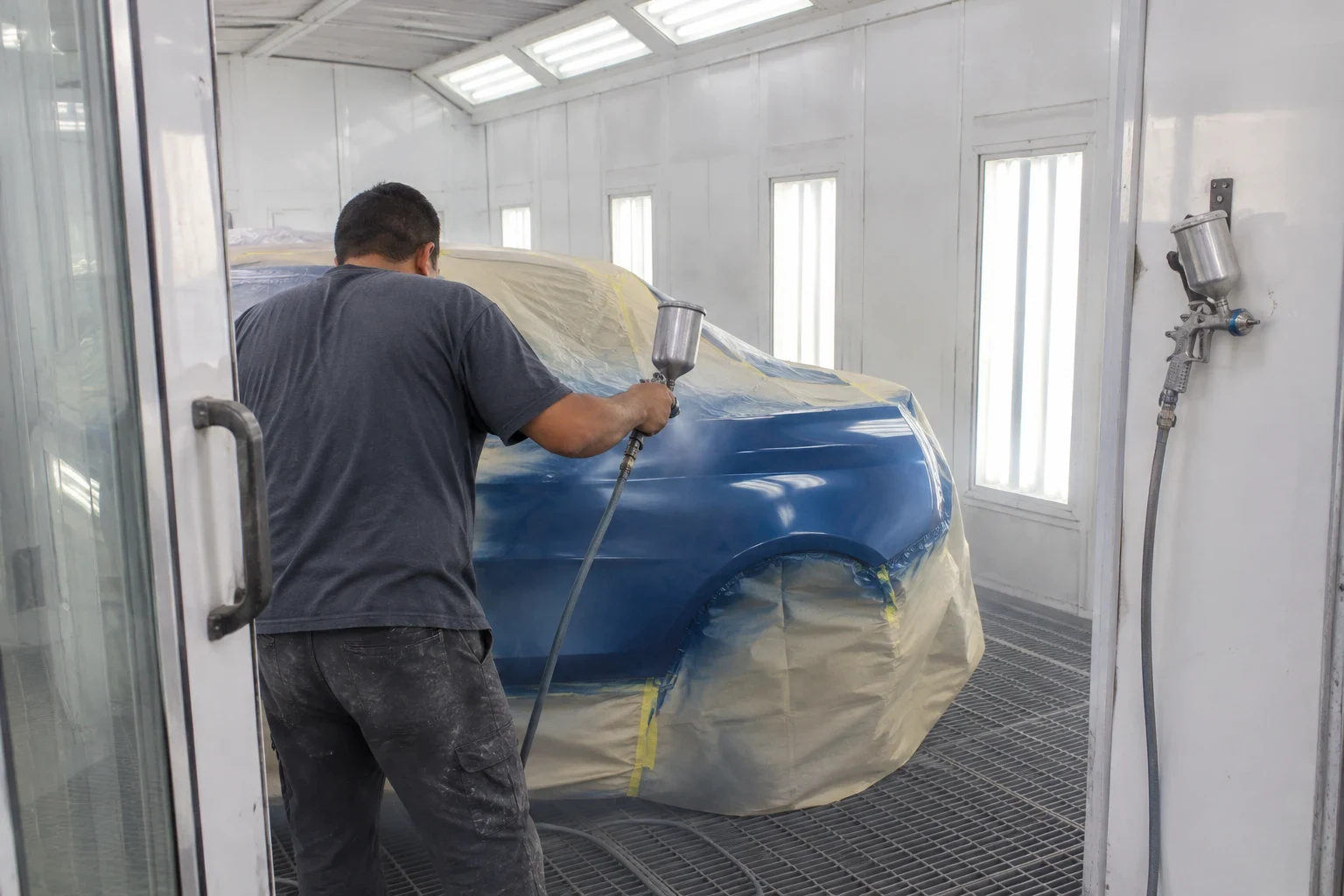
- Each layer goes on in our booth with proper flash time between coats, and the clear is cured before anyone handles the panel. Correct film thickness is what lets the finish survive years of washing and sun.
- Cut, buff and final inspection
- After cure we wet-sand any dust nibs, polish the panel to match the gloss of the rest of the car and check it under lights before you pick it up.
- Paint correction
- For oxidation and swirl marks that have not gone through the clear, we machine compound and polish instead of repainting.
Signs your paint needs attention
Chalky, dull panels
If your hand comes away with a faint film of color, the clearcoat is oxidizing. Caught now, polishing can often bring it back.
Peeling clearcoat
Whitish patches that look like sunburn on the roof or hood mean the clear has delaminated. It keeps lifting at the edges and has to be sanded off and refinished.
Fading on top surfaces
Hoods, roofs and trunk lids take direct sun all day through a San Joaquin Valley summer, so they fade before the sides do. A visible color difference between the hood and fenders means the protection is thinning.
Chips down to primer or metal
A rock chip that shows gray primer or bare steel lets moisture under the paint. Left alone, rust creeps under the surrounding finish and turns a small spot repair into a full panel.
Bubbles or blisters
Small blisters usually mean rust or trapped moisture under the paint. We open them up to find the cause before refinishing.
An earlier repair that no longer matches
A panel repainted years ago that now looks off in sunlight can be re-blended so the color carries across evenly.
How a paint job runs at our shop
- 1
Inspection and film check
We look at the car with you, measure the finish with a paint thickness gauge and explain what we found panel by panel. You get a written estimate that separates correction, spot repair and full refinishing.
- 2
Teardown and masking
We remove trim, handles, emblems and lights where needed instead of taping around them, so new paint wraps the panel edges the way factory paint does. Everything else gets masked.
- 3
Prep and prime
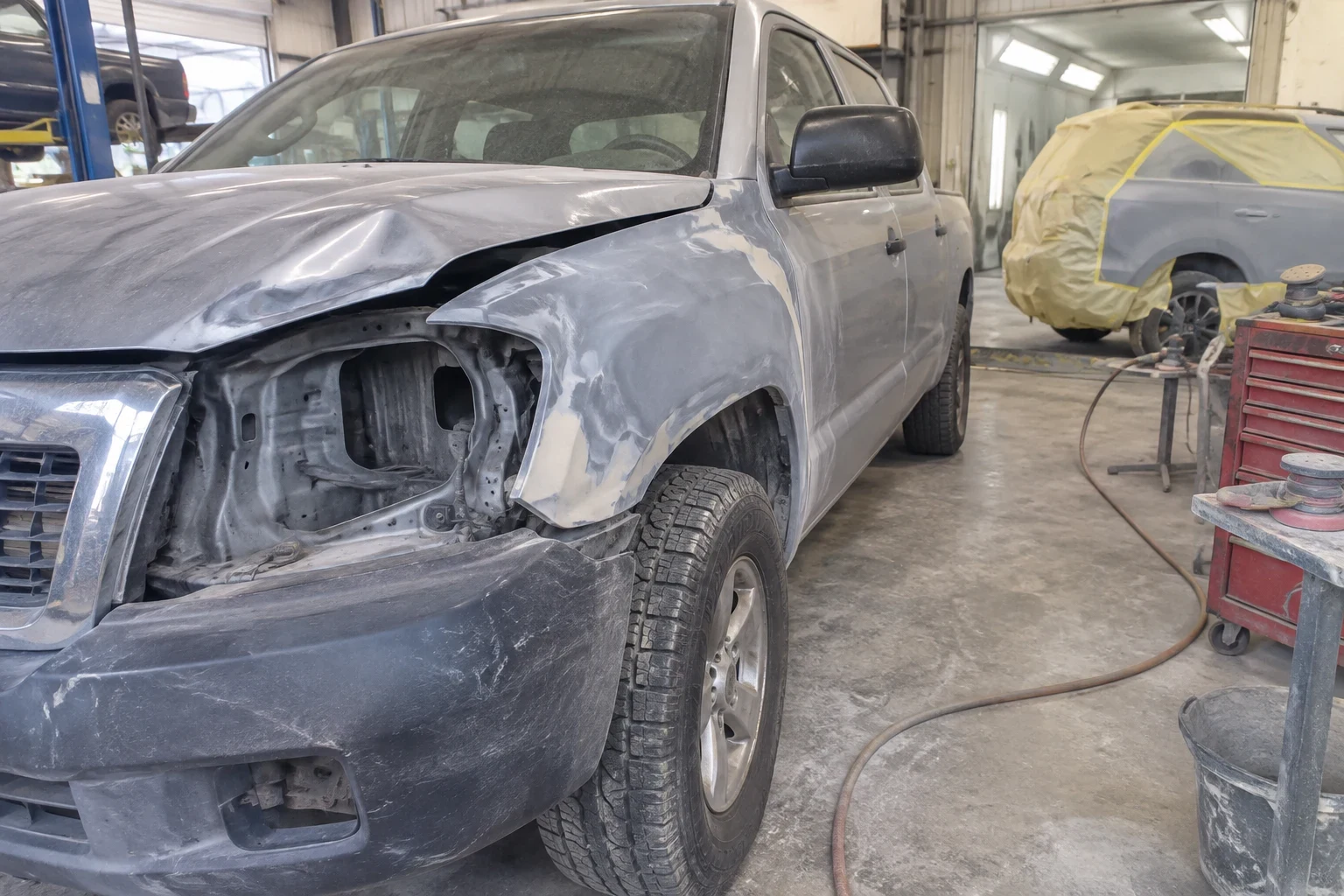
Failing paint is sanded out, any rust is treated, and primer surfacer is applied and block sanded flat. This step takes the most time and decides how long the finish lasts.
- 4
Spray and cure
Basecoat and clearcoat go on in the booth, then the panels are cured before anything is reassembled.
- 5
Finish and handover
We polish, reinstall the parts, wash the car and walk around it with you. We also tell you how soon you can wax it or run it through an automatic wash.
What moves the price of paint work
Paint pricing depends far more on prep labor than on the paint itself. After we see the car, you get a written estimate with labor and materials listed by panel, so you can see where the money goes. If a correction will do the job, we quote that rather than a repaint.
- How deep the damage goes
- Oxidation in the clear is a polishing job. Failure down to primer or metal means sanding, priming and refinishing that panel.
- Number of panels and blending
- Each repainted panel usually needs the panels next to it blended for an invisible match, which adds labor and material.
- Color type
- Solid colors are the simplest. Metallics, pearls and tri-coat colors use more material, more test cards and more care to blend.
- What turns up underneath
- Rust or dents found during prep have to be fixed before paint goes on. We show you photos and update the estimate before doing that work.
- Trim and sensors
- Panels carrying parking sensors, moldings or emblems take longer to strip and reassemble correctly.
Paint and refinishing questions
Something not covered here? (559) 955-0936
Can you match the paint on an older car that has faded?
In most cases, yes. We start with the factory code, then adjust the formula with spray-out cards until it matches your paint as it looks today, not as it looked new. Blending into the neighboring panels covers any small difference that remains.
Do I need a full repaint or just the bad panels?
Most cars only need the panels that have failed, plus blending next to them. A full repaint makes sense when the clearcoat is failing across most of the car or you want a color change. We tell you plainly which applies after we look at it.
How many days does paint work usually take?
Turnaround comes down to the number of panels involved and the prep each one needs. One refinished fender clears the booth sooner than a roof, hood and trunk lid with peeling clear, and the clearcoat has to cure fully or the finish comes out softer than it should. Your estimate includes an expected timeline, and we phone you if the schedule shifts.
How should I care for fresh paint?
Hand wash only for the first few weeks and hold off on wax or sealant until the paint has fully cured; we tell you the right window for the products used on your car. After that, regular washing and a coat of wax or sealant a few times a year keep the clear from oxidizing. Parking in shade or using a cover in summer helps more than anything else.
Will insurance pay for paint damage?
When a collision, vandalism or another covered event damaged the finish, insurers generally pay to restore the paint along with the rest of the repair. Clearcoat that has worn out over years of sun is treated as normal wear, and policies rarely cover that. Our Insurance Claims page explains how we work with your insurer when the repair is covered.
Keep the finish you already have
Tell us what you are seeing on the paint, and we will set a time for you to bring the car in. We look it over with you and walk you through what will hold up longest.