ServicesInsurance Claims
Insurance Claim Repairs in Firebaugh
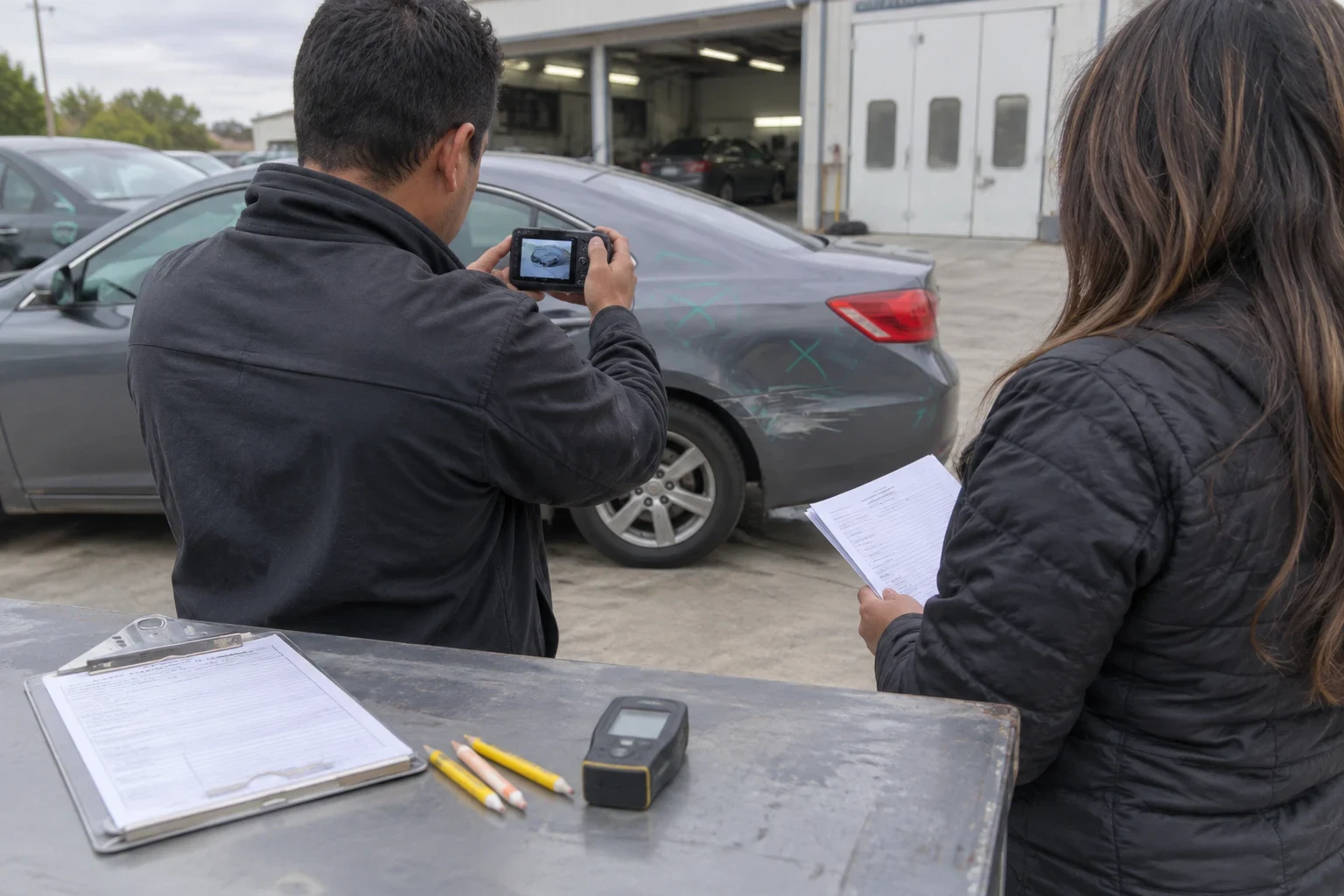
An insurance claim pays for what gets written down. We tear down your car, photograph every damaged part, write a line-item estimate and send supplements to your adjuster, so the repair covers the brackets, sensors and corrosion protection a quick drive-through estimate misses.
How an insurance claim repair works here
Most first estimates are written from the outside of the car. An adjuster or a photo app sees a cracked bumper cover and a scuffed fender, but not the crushed energy absorber, the bent reinforcement bar or the radar bracket knocked a few degrees out of aim behind it. That first number is a starting point, not the final scope of the repair.
Our job is to find the rest before we start fixing anything. We disassemble the damaged area, measure what needs measuring and add each hidden item to the estimate with photos. Then we send that supplement to your insurer and wait for approval before the work goes ahead.
We do this carefully because shortcuts on a claim tend to come back. A reused clip that rattles loose, a seam left without corrosion protection or a sensor that was never recalibrated can turn into a second problem a year later. Repairing it completely the first time keeps your vehicle sound for the years you plan to drive it.
What we handle on your claim
Teardown and damage documentation
We remove the bumper cover, lamps and inner panels around the impact. Every damaged part gets photographed in place, so your adjuster sees the same thing we see.
Line-item estimate
The estimate lists each part, each labor operation and each material, including refinish time, blending into adjacent panels and seam sealer. You can read exactly what the claim is paying for.
Supplements to your insurer
When teardown turns up more damage, we write a supplement with photos and repair procedures attached. Nothing extra gets done without approval, so you are not left holding an unexpected bill.
Scans and calibrations
Modern cars carry cameras, radar and parking sensors in the bumpers, grille and windshield. We scan the vehicle before and after the repair and include any calibration the procedures call for on the estimate.
Plain answers about your deductible
We explain what your deductible covers, how parts choices on the estimate work and what the insurer has approved. We do not act as your adjuster, but we tell you clearly where the claim stands.
Signs the claim estimate may be short
The estimate was written from photos
A photo estimate cannot see behind a bumper cover. If the car was never taken apart, expect hidden parts to be missing from the list.
Panel gaps changed after the hit
A hood or door that now sits higher on one side, or a gap that widened, usually means mounting points or structure moved. That needs measuring, not just new sheet metal.
Warning lights came on
Lane-keep, blind-spot or parking sensor warnings after a minor bump point to a misaligned sensor or damaged wiring. Those repairs belong on the claim.
The car pulls or the tires wear oddly
A curb strike or side impact can bend a control arm, tie rod or subframe mount. If the steering wheel sits off center, suspension parts may need to be added to the estimate.
From first call to finished repair
- 1
Phone call and claim details
Tell us what happened, your insurer and your claim number if you have one. We explain what to bring and when to drop your car off.
- 2
Inspection and teardown
We inspect the vehicle, disassemble the damaged area and photograph everything. This is where the real scope of the repair shows up.
- 3
Estimate and insurer approval
We send the line-item estimate and any supplements to your adjuster. We keep you updated while the insurer reviews it, and work starts once it is approved.
- 4
Repair, refinish and calibration
Structural work comes first, then body panels, corrosion protection, paint and reassembly. We finish with a post-repair scan and any required sensor calibration.
- 5
Final check and pickup
We road test the car, check panel gaps and confirm every light and system works. You get your vehicle back with the paperwork showing what was repaired.
What shapes the cost of a claim repair
On an approved claim, your insurer pays the covered repair and you pay your deductible. What the final repair costs, and how long it takes, depends on how much damage sits behind the visible panels. These are the things that move it most.
- Hidden structural damage
- Bent reinforcement bars, crush zones or frame rails add parts, measuring and labor. They are also the items most often missing from a first estimate.
- Sensors and calibration
- Radar, cameras and parking sensors add parts cost and calibration time. A bumper with no electronics is a much simpler repair than one carrying four sensors.
- Paint and color match
- Fresh paint on one panel rarely matches aged factory paint beside it, so we fade the new color into the neighboring door or fender to hide the edge. Three-stage colors and pearl finishes need extra coats, more material and longer cure time in the booth.
- Parts availability
- Back-ordered parts can stretch a repair by days or weeks. Your policy terms also affect which parts the insurer approves, and we explain those choices before work begins.
Insurance claim questions
Something not covered here? (559) 955-0936
Do I have to use the shop my insurer recommends?
No. In California, you choose where your car is repaired, and your insurer cannot require a particular shop. If you pick us, we handle the back-and-forth with your adjuster from inspection through approval.
What if the insurance estimate is lower than yours?
That is common, because the first estimate is often written before anyone looks behind the panels. We document the extra damage with photos and send a supplement. The insurer reviews it, and work on those items waits for approval.
Should I file a claim for minor damage?
It depends on your deductible and how much damage is hidden. A scuffed bumper cover may cost less than your deductible, while a cracked one with a damaged sensor bracket often does not. We can look at the car and tell you honestly what the repair involves before you decide.
Can I file the claim after I bring the car in?
Yes. Many drivers report the accident to their insurer and then bring the car to us. Give us your claim number and we will coordinate the inspection and estimate with the adjuster.
What happens if the other driver was at fault?
You can file through the other driver's insurance or through your own policy, depending on your coverage. Either way, the repair process at our shop is the same, and we send the estimate to whichever insurer is handling the claim.
Start your claim repair with a phone call
Have your claim number handy if you have one. We will explain the next steps and when to bring your car in, whether you drive from Firebaugh, Mendota or Los Banos.