ServicesBumper Repair
Bumper Repair in Firebaugh
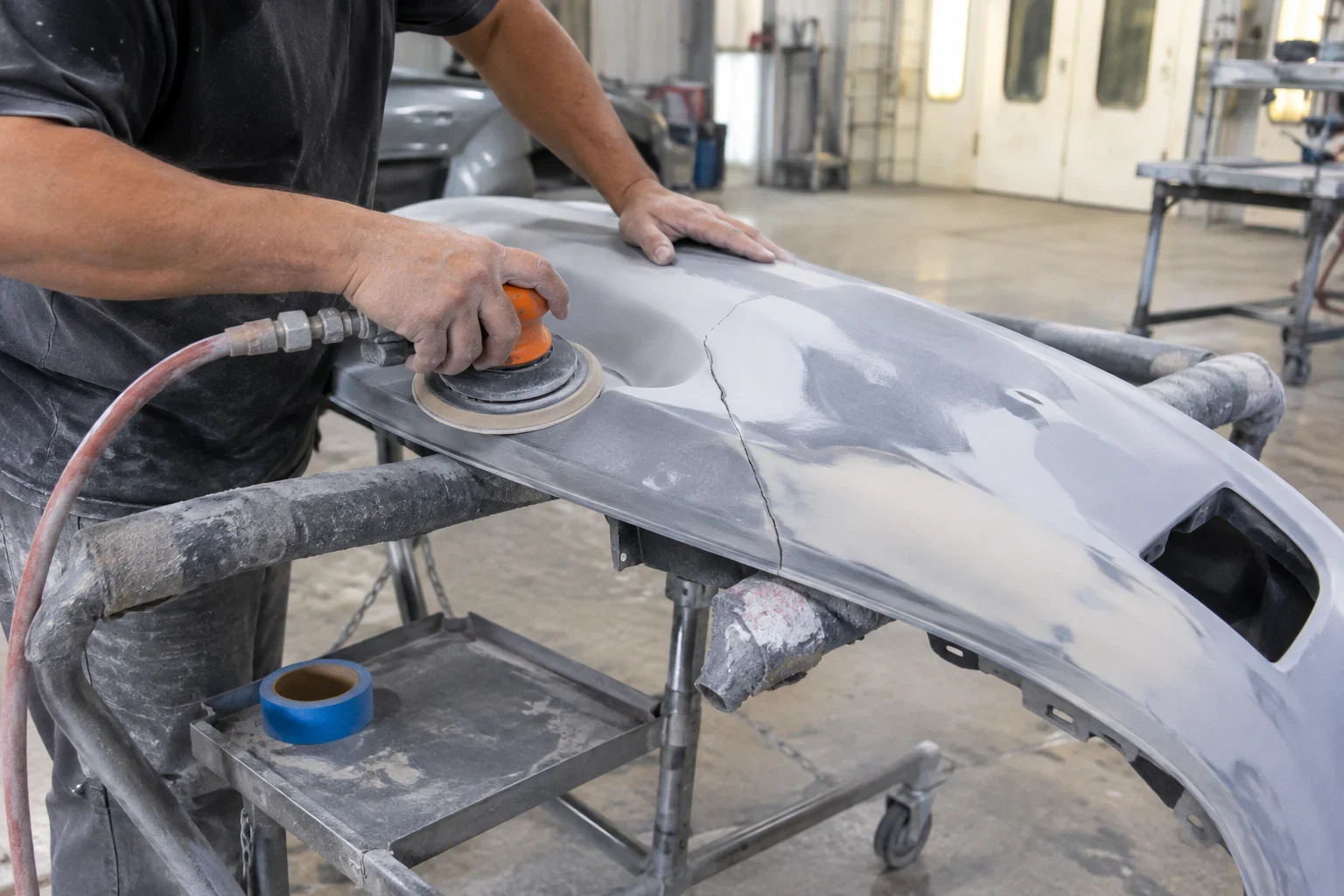
Most bumper damage is a scuffed, cracked, or pushed-in plastic cover, and much of it can be repaired instead of replaced. We weld the plastic, rebuild broken tabs, check the parts behind the cover, and refinish it to match.
Repairing the Bumper You Already Have
The painted part you see is a bumper cover, usually molded from polypropylene, TPO, or a polycarbonate blend. Behind it sit a foam or plastic energy absorber and a steel or aluminum reinforcement bar that takes the real load in a crash. A parking-lot tap often leaves the bar untouched and only damages the cover, which is why many bumpers are good candidates for repair.
Repair keeps the factory part, its fit, and its mounting points. A cover that is welded from the back, reshaped with heat, and refinished with a flexible primer and clear coat can last as long as the rest of the car's finish. When a cover is torn through in several places or the plastic has gone brittle, we tell you replacement is the better choice and explain why.
What Our Bumper Repair Covers
- 01
Plastic welding of cracks and tears
Most covers carry a molded material code on their inner face, such as PP or TPO, and we pick welding rod that matches it. The weld is then backed with mesh on the inside. Because the rod and cover are the same plastic, the weld fuses into the original part rather than resting on the surface the way filler alone does.
- 02
Mounting tab and bracket repair
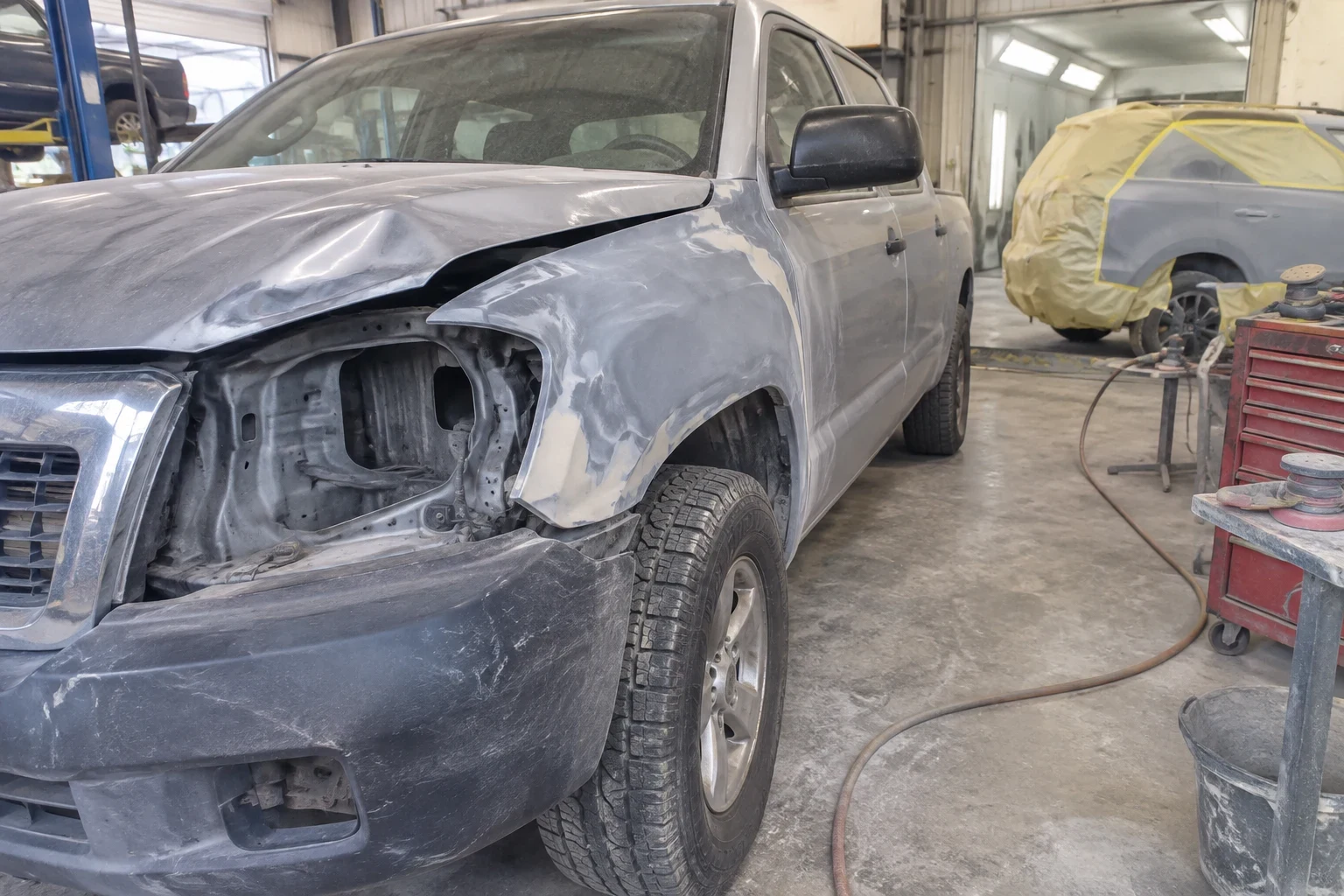
Broken tabs are the reason so many bumpers sag at the wheel opening or leave a wide gap at the fender. We rebuild tabs and replace clips and brackets so the cover holds its line.
- 03
Reshaping pushed-in covers
Thermoplastic covers can often be heated and worked back into shape from behind. This saves the part when the plastic is deformed but not split.
- 04
Absorber and reinforcement check
With the cover off, we inspect the energy absorber and reinforcement bar for crush or bends. A cracked absorber or kinked bar gets noted in the estimate, because a cosmetic fix over damaged structure is not a real repair.
- 05
Flexible refinish
Bare plastic needs an adhesion promoter and a flexible primer so the paint can move with the cover without cracking. We then color-match and clear coat it, the same refinish process our paint and refinishing page describes.
Questions about Bumper Repair?
Call(559) 955-0936Signs Your Bumper Needs Attention
A gap at the fender or headlight
An uneven gap usually means a broken tab or bent bracket. Left alone, the loose edge vibrates and the crack spreads.
Cracks or stress whitening
White lines in the plastic show where it was stretched past its limit. Those spots tend to split further with heat and road vibration.
Peeling or flaking paint
When paint lifts off a bumper in sheets, the adhesion layer has failed or the cover flexed under rigid paint. In long hot summers, UV speeds that up and lets the plastic underneath dry out.
Sensor warnings after a bump
Parking sensors and some radar units mount in or behind the cover. A warning light or false alerts after a minor hit can mean a sensor or its bracket shifted.
A cover that sits low or pushed in
A dropped corner or a dished-in face may be cover damage only, or it may hide a crushed absorber. Either way, it is worth a look before it catches a curb or a gust of wind on the highway.
How a Bumper Repair Goes at Our Shop
- 1
Inspection and written estimate
You bring your car in and we look at the cover, the gaps, and what we can see behind it. You get a written estimate that says whether we plan to repair or replace the cover and why.
- 2
Removal and teardown
We take the cover off to see the absorber, bar, brackets, and any sensor mounts. If we find hidden damage, we show you photos and update the estimate before going further.
- 3
Structural and plastic repair
Brackets and tabs are repaired or replaced first, then the cover is welded, reshaped, and sanded smooth. We test-fit it on the car to confirm gaps before any paint goes on.
- 4
Refinish and reinstall
The cover gets adhesion promoter, flexible primer, color, and clear, then it cures. We reinstall it, check the gaps and sensors, and clean the car before you pick it up.
What Moves the Cost of Bumper Repair
The price depends mostly on how far the damage goes past the cover and how much refinishing the repair needs. We list each part and each labor step in the estimate, so you can see what you are paying for. If teardown turns up more, we call you before doing that work.
- Repair versus replacement
- A cover with one tear or a few broken tabs usually costs less to repair. A cover split in several places, or one made of brittle aged plastic, can be cheaper and longer-lasting to replace.
- Hidden parts behind the cover
- A crushed absorber, bent reinforcement bar, or broken bracket adds parts and labor. These do not show from the outside, which is why the estimate is confirmed at teardown.
- Sensors and lighting
- Bumpers with parking sensors, radar, fog lights, or washer nozzles take more time to remove and reinstall. A moved sensor may also need its position checked after the repair.
- Paint and blending
- Tri-coat and pearl colors take extra steps. Matching an older, sun-faded finish may mean blending color into the fender next to the bumper.
Bumper Repair Questions
My bumper cover has a crack in it. Do I have to buy a new one?
Often you do not. Most cracks can be closed with a plastic weld on the inside face, backed with reinforcing mesh and then refinished. What decides it is the number of tears, where they run, and whether the plastic still flexes or has turned brittle. We give you our recommendation and point out the reason on your car.
Will the repaired spot crack again later?
A properly welded and reinforced crack is usually stronger than the plastic around it. What causes repeat failures is filler used without a weld, or rigid paint applied without flexible primer. We use matched welding rod and a flexible refinish so the repair moves with the cover.
My bumper only has scuffs. Is that worth fixing?
Scuffs that go through the clear coat expose the color and primer to UV and road grime. Over time the paint around them starts to peel. Sanding and refinishing a scuffed area early keeps the rest of the bumper finish from breaking down.
Should I file an insurance claim for a bumper?
That depends on the estimate and your deductible. If you get our estimate first, you can compare the repair cost to your deductible before deciding. Our Insurance Claims page explains how we work with your insurer when you do file.
Does the bumper affect my parking sensors or cruise control radar?
On many newer vehicles, yes. Sensors sit in the cover or on brackets right behind it, and paint thickness over a radar zone matters. We check those mounts during the repair and tell you if the vehicle needs anything further.
Keep Your Original Bumper on the Road
Tell us what happened and what the bumper looks like now. We will explain what to expect at the inspection and set a time for you to bring your car in.