ServicesCollision Repair
Collision Repair in Firebaugh
We repair crash damage from the structure out: measured frame points, replaced or repaired panels, restored seam sealer and corrosion protection, then matched paint. The goal is a car that drives straight and stays solid for the years you plan to keep it.
What collision repair covers and when you need it
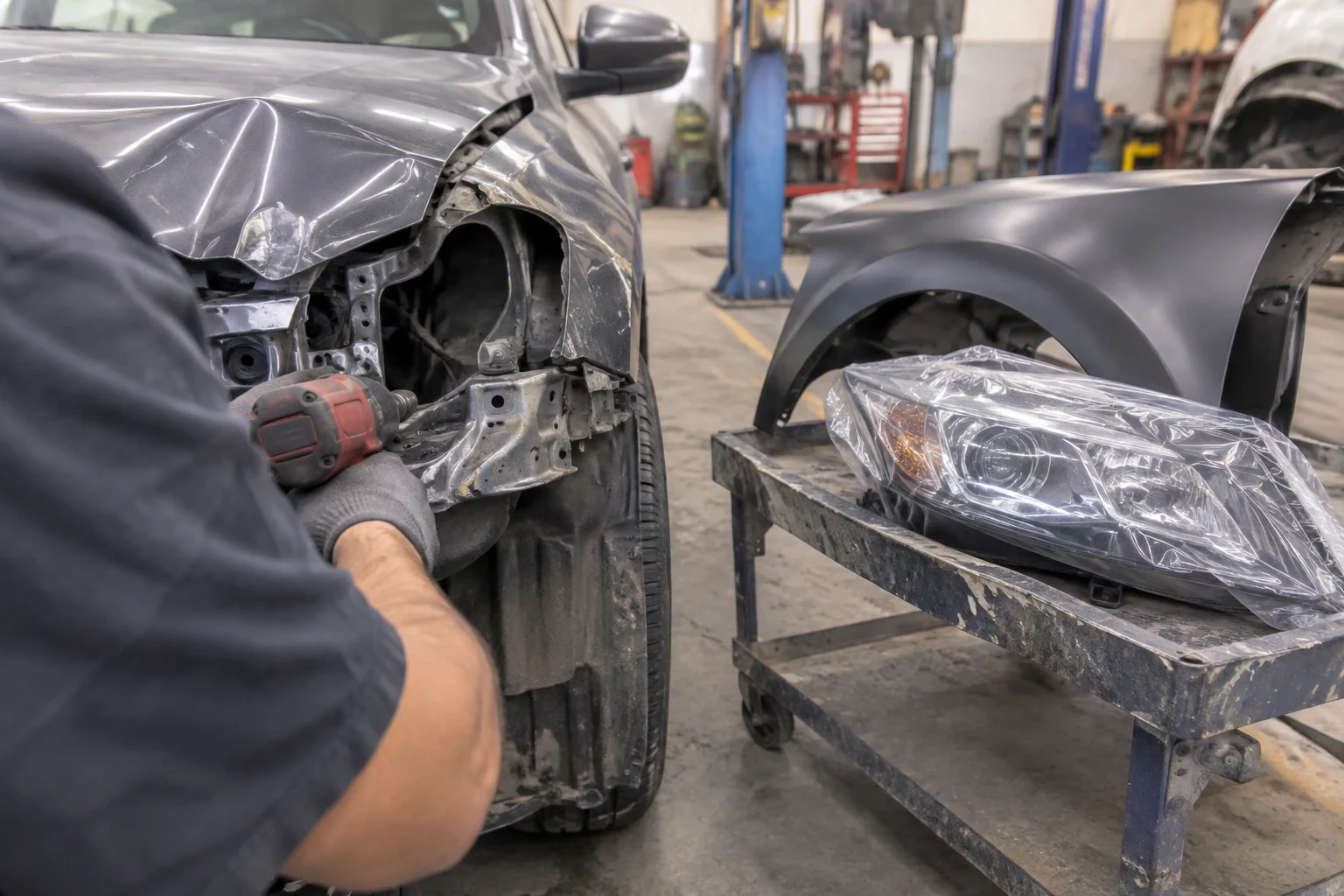
A collision rarely stops at the part you can see. A front hit that crumples a bumper cover can also bend the reinforcement bar behind it, crack headlamp mounts and push the radiator support back a few millimeters. Collision repair means finding all of that, fixing it in the right order and putting the vehicle back to its factory dimensions.
We treat every repair as maintenance for the rest of the car's life. Bare metal gets primer and cavity wax, factory seam sealer gets replaced where we cut it, and clips and fasteners get renewed instead of reused when they are designed for one use. Those steps are invisible on pickup day, but they decide whether rust, rattles or water leaks show up two years later.
If the damage is limited to a single shallow dent or a scuffed cover, our dent repair or bumper repair pages may fit better. Anything involving bent metal, misaligned gaps or warning lights belongs here.
What the repair includes
- 01
Teardown and damage mapping
We remove the damaged panels to see the brackets, sensors and inner structure behind them. Every hidden problem goes on the written estimate before work continues.
- 02
Structural measurement
We check the body against the manufacturer's reference points. If anything is out of spec, the car goes to frame straightening before any outer panel is fitted.
- 03
Panel repair or replacement
Some panels can be metal-finished back to shape. Others, especially high-strength steel or aluminum that has been creased, should be replaced, and we explain which and why.
- 04
Corrosion protection restored
Weld-through primer, seam sealer and cavity wax go back where the factory had them. That is what keeps moisture from working into new joints.
- 05
Refinish and color match
Our paint and refinishing work blends adjacent panels so the new color sits evenly with the original finish in daylight.
- 06
Systems and safety checks
After reassembly we scan for fault codes, check that cameras and radar sensors read correctly, and confirm the wheel alignment.
Questions about Collision Repair?
Call(559) 955-0936Signs your car needs collision repair
Panel gaps that changed
If the gap between the hood and fender or the door and quarter panel is wider on one side, something behind it has moved. That shift can be structural.
Pulling or uneven tire wear
A car that drifts after an impact may have a bent suspension mount or control arm. Driving on it wears tires fast and can hide a deeper problem.
New warning lights
Airbag, lane-keep or parking sensor lights after a hit usually mean a damaged sensor, connector or mounting bracket.
Doors or trunk that stick
When a latch suddenly needs a slam, the opening has likely shifted out of square.
Cracked paint near the damage
Spider cracks or flaking around a dent mean the finish is open to moisture. Valley dust and the wet tule fog season will start corrosion there sooner than you'd expect.
How the repair moves through our shop
- 1
Talk it through and bring it in
Start with a phone call to describe what happened. You bring the vehicle to our shop, and we look it over with you and photograph the damage.
- 2
Written estimate with photos
After teardown you get a line-item estimate listing parts, labor and materials, with photos of anything hidden. If the insurance claim needs a supplement, we document it the same way.
- 3
Structure first, then panels
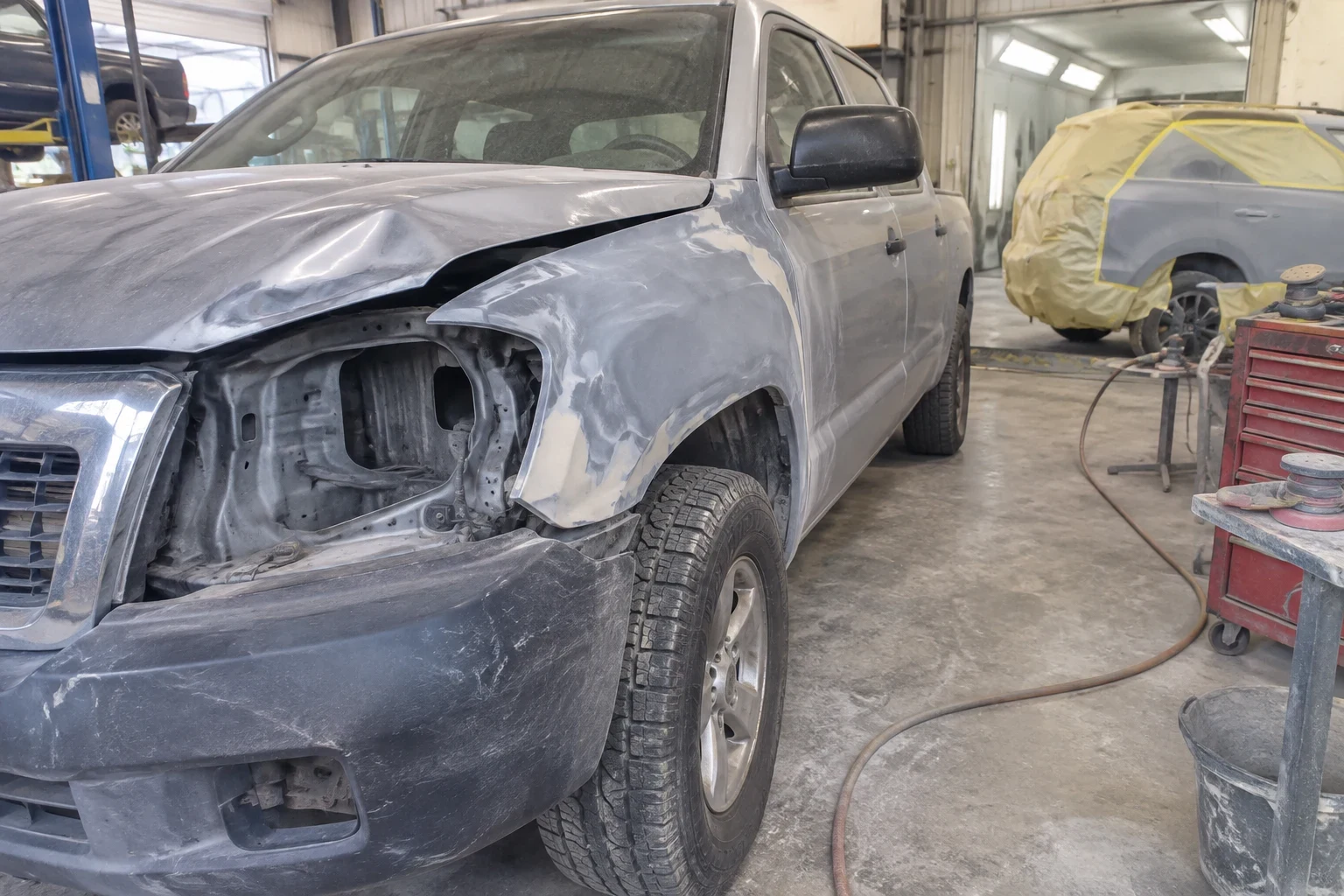
We set the structure to spec, fit new or repaired panels, and restore sealers and corrosion protection before any paint goes on.
- 4
Refinish, reassemble, verify
The car is painted, reassembled and test-driven. We scan the electronics and check sensor function before calling you to pick it up.
What moves the cost of collision repair
Two cars with dents that look alike from the curb can end up with very different totals. Most of the price is decided by what sits behind the outer skin and by the steps needed to rebuild it properly. We walk you through every line of the estimate so each charge has a reason attached.
- Damage behind the panel
- A bent bumper reinforcement, a cracked headlamp mount or a radiator support pushed out of place adds both parts and labor. Taking the damaged area apart is the only dependable way to find these before the work starts.
- Which parts go on
- New original equipment parts, aftermarket parts and repaired originals vary in price and in how closely they fit. Your insurance policy may spell out which type it pays for, and we note the choice on the estimate.
- Cameras, radar and calibration
- On many newer vehicles the bumper, mirrors and windshield carry driver-assist sensors. Swapping or re-aiming those sensors after the repair is its own line item.
- Color and finish complexity
- Three-stage and pearl finishes are built from more layers, so they use more product and more booth time than a solid color. Getting them to match the original often requires fading the new color into the neighboring panels as well.
Collision repair questions
How long will my car be in the shop?
The answer comes down to how much is damaged and how quickly the parts arrive. A repair that is mostly bolt-on panels can wrap up in a few days, while structural work or a backordered part adds time. Once we have the damaged area apart, we give you a realistic schedule and call you if anything shifts.
Why did my estimate change after you took it apart?
An initial inspection can only account for what shows on the outside. With the panels removed we often find bent brackets, broken clips or cracked mounts. Each one is photographed and added to the estimate before we repair it, so every change comes with an explanation.
Is it safe to drive my car before the repair?
Short trips are generally fine if the lights work, no fluid is dripping, nothing is touching a tire and the airbag light is off. If the steering pulls hard or a door will not stay latched, it is safer to have the vehicle towed to our shop.
Can you work with my insurance company?
Yes. We document the damage, prepare the estimate and send photo-backed supplements when teardown turns up more. Our insurance claims page covers how the process runs and which decisions belong to you and which belong to the adjuster.
Will the repaired area rust later?
Rust after a repair almost always traces back to a skipped step, such as unprimed bare metal, seam sealer that was never replaced or cavity wax left out. We put that protection back on every job because it is what keeps the repair solid for as long as you own the car.
Get the repair done once and done right
Tell us what happened and what you are seeing. We will explain the next step and set a time for you to bring your vehicle in.