ServicesFrame Straightening
Frame Straightening in Firebaugh
A hard hit can shift your car's structure by a few millimeters, and that small shift wears tires, loads suspension parts and leaves doors that never close right. We measure, pull and verify the structure so the rest of your vehicle lasts as it was built to.
What frame straightening actually fixes
Most cars and small SUVs from recent decades are built as a unibody, with the floor pan, rails, rocker panels and strut towers welded into a single shell. Pickups and many full-size SUVs are different: the body bolts onto its own steel frame underneath. In both designs, an impact can shove a rail rearward, kink an inner apron or rack the structure a little out of square. Panels attached to it then sit out of position, and every part that relies on that geometry begins to fight it.
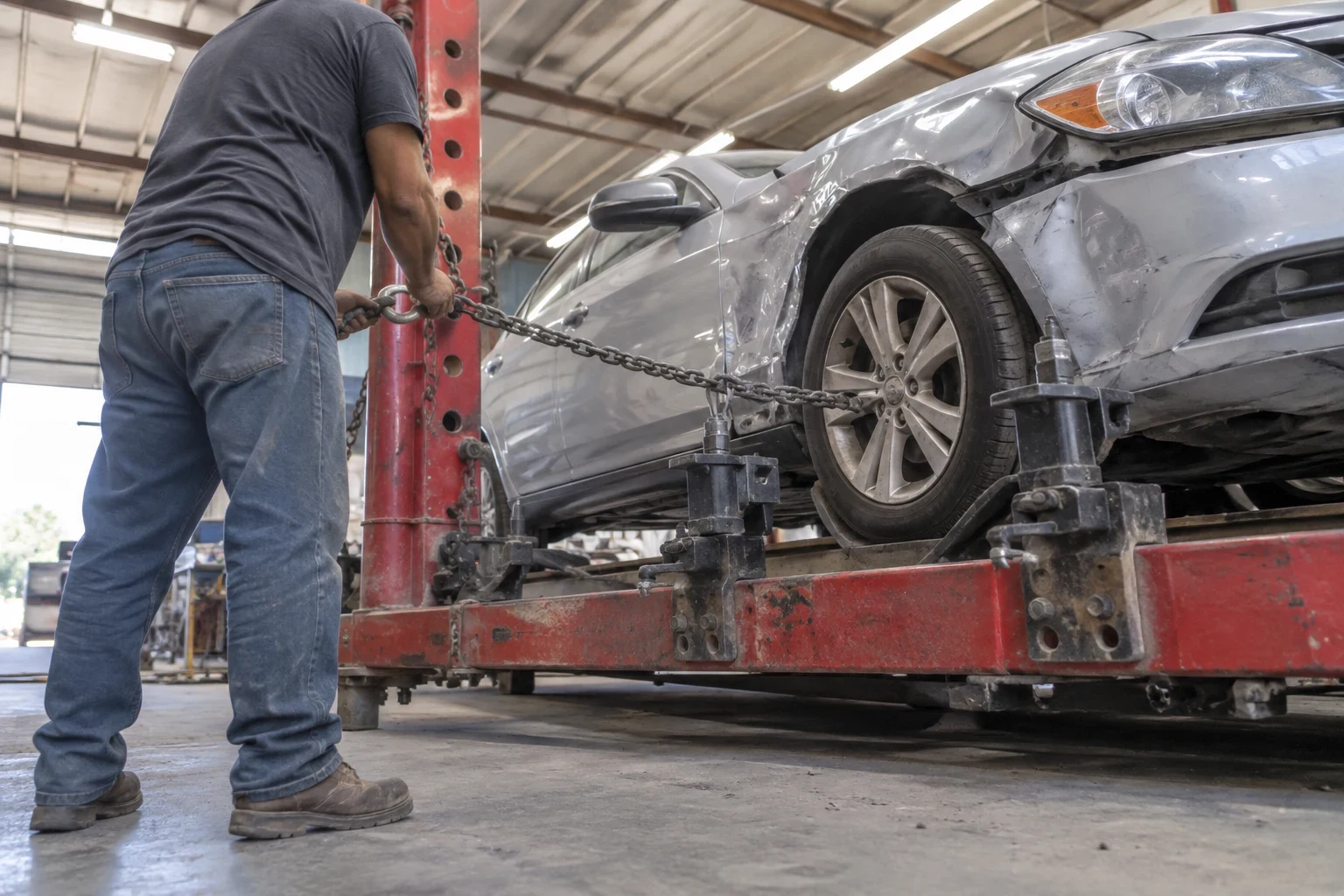
Frame straightening means measuring the structure at fixed reference points, comparing those numbers to the manufacturer's published dimensions, and using controlled hydraulic pulls to bring it back within tolerance. Done right, your wheels track straight, your suspension carries load the way it was designed to, and crumple zones are ready to do their job again.
We treat this as the foundation for the rest of the repair. Panels, paint and alignment only hold up over the years if the structure underneath is where it belongs.
What the work includes
Structural measurement
We measure the vehicle at the manufacturer's datum points, including suspension mounts, rail ends and strut towers. The readings show exactly which points moved, in which direction and by how much, so the repair plan is based on numbers rather than how the car looks.
Controlled pulling
The vehicle is anchored to a frame bench and pulled in stages from several directions at once. Pulling slowly and re-measuring between pulls lets the metal relax back toward its original shape instead of tearing or stretching.
Section or replace when needed
Some damage should not be straightened. High-strength and ultra-high-strength steels can weaken if heated or bent past a point, so when the manufacturer's repair procedure calls for sectioning or replacing a rail, we follow it and explain why.
Corrosion protection on repaired areas
Pulling, welding and sectioning disturb factory coatings inside rails and seams. We restore seam sealer and cavity protection so moisture does not start rust where you cannot see it.
Final verification
After the pulls, we take a full set of measurements again and record the results. If your car has driver-assist sensors mounted on structure we moved, we tell you whether they need calibration before the vehicle goes back on the road.
Signs your car may need frame work
Uneven panel gaps
If the gap between a door and fender, or the hood and fender, is wider on one side, the mounting points underneath may have shifted.
Pulling or crooked steering wheel
A car that drifts even after an alignment, or a steering wheel that sits off center, can point to a moved suspension mount rather than a simple alignment issue.
Tires wearing on one edge
Feathered or one-sided wear that comes back after new tires and an alignment often means the wheels cannot be set to spec because the structure is out.
Doors, hood or trunk that bind
Latches that need slamming, or a trunk lid that rubs, suggest the opening itself has changed shape.
Wrinkles under the car
Creases in the floor pan, rail or inner fender apron after a collision are a clear sign the impact reached the structure, even if the outer panels look fine.
How a frame repair moves through our shop
- 1
Teardown and inspection
We remove damaged bumpers, lamps and panels to see the structure directly. Hidden damage is common at this stage, and we photograph what we find so you can see it too.
- 2
Measure and plan
The vehicle goes on the bench and we record its measurements against factory dimensions. From those readings we write the repair plan, listing what will be pulled, what will be sectioned and what will be replaced.
- 3
Pull and re-measure
We make staged pulls and check the numbers after each one. This takes patience, and it is the step that decides how straight the car drives for the rest of its life.
- 4
Rebuild on a true structure
With the structure in spec, we fit panels, set gaps and move the car on to paint and refinishing. A four-wheel alignment follows, and we confirm it lands within factory range.
What affects the cost of frame straightening
Frame work is priced from the measurements and the manufacturer's repair procedure, not from a flat rate. We can give a fuller picture once the damaged parts are off and the car is on the bench, and we explain each line in the estimate before work continues.
- How far the structure moved
- A rail pushed back a few millimeters may need a single setup and pull. Damage spread across both sides or through the floor pan takes more setups and more bench time.
- Steel type and repair procedure
- Some modern rails are made from steel the manufacturer says must be replaced, not straightened. Replacement parts and the welding they require change the cost considerably.
- Unibody or body-on-frame
- A separate truck frame and a unibody car are anchored, measured and repaired differently, and parts availability differs too.
- Related parts and calibration
- Bent suspension components, damaged mounts and sensors that need calibration after structural work all add to the final total.
Frame straightening questions
Something not covered here? (559) 955-0936
Is a car safe to drive after frame straightening?
When the structure is measured back within factory tolerance and any rails the manufacturer requires replaced are replaced, the car's crash structure is restored to its designed shape. That is why we measure before and after rather than judging by eye. We will not recommend straightening a part the repair procedure says must be replaced.
Will frame damage make my car a total loss?
Not necessarily. Many vehicles with structural damage are repaired every day. Whether a car is totaled comes down to the repair cost compared to its value, which is your insurer's decision, and we give them the measurements and repair plan they need to make it.
How long does frame work keep my car off the road?
The bench readings set the schedule. A rail that shifted only slightly can often be pulled as part of a normal collision repair, while a rail that has to be sectioned adds time for parts to arrive and for the welding itself. Once your car has been measured, we give you a realistic timeline instead of a guess.
Do I still need an alignment after the frame is straightened?
Yes. Straightening puts the suspension mounts back where they belong, and the alignment then sets the wheels to those mounts. Skipping it would leave the tires wearing unevenly even on a straight structure.
Does insurance pay for frame straightening?
When the accident falls under your coverage, the structural work usually sits on the same insurance claim as the panels and paint. Your insurer makes the coverage call, and we back it up with before-and-after measurements, photos and the written repair plan. The Insurance Claims page walks through how we document damage and work alongside your adjuster.
Get the structure right before anything else
If your car has been in a collision and something feels off, we will talk through what you are seeing and what measuring will tell us. We work with drivers from Firebaugh, Mendota, Dos Palos and the surrounding area.