ServicesDent Repair
Dent Repair in Firebaugh
A dent is more than a cosmetic flaw. Stretched metal pulls on the paint above it, and cracked clearcoat lets moisture reach bare steel. We remove dents with paintless methods when the finish is intact, and repair and refinish the panel when it is not.
Fixing the Dent and the Paint That Protects the Panel
Every body panel on your car is steel or aluminum covered by a thin stack of coatings: e-coat, primer, base color and clearcoat. When a panel dents, the metal stretches and the coatings flex with it. A shallow ding often leaves that stack whole. A sharp crease or a dent on a body line usually puts hairline cracks in the clearcoat, and those cracks are where corrosion starts.
That is why we look at the paint before we decide how to fix the metal. If the finish is sound, paintless dent repair keeps the factory coating in place, and the factory coating is the best rust protection your vehicle will ever have. If the finish is broken, we repair the metal, seal it and refinish the panel so the damage does not keep working under the surface.
Small dents are worth handling early. A door ding left for a few Central Valley summers bakes in the sun, and any crack in the clear widens with heat cycles until the panel needs far more work than the original dent did.
What Our Dent Repair Covers
- Paintless dent repair
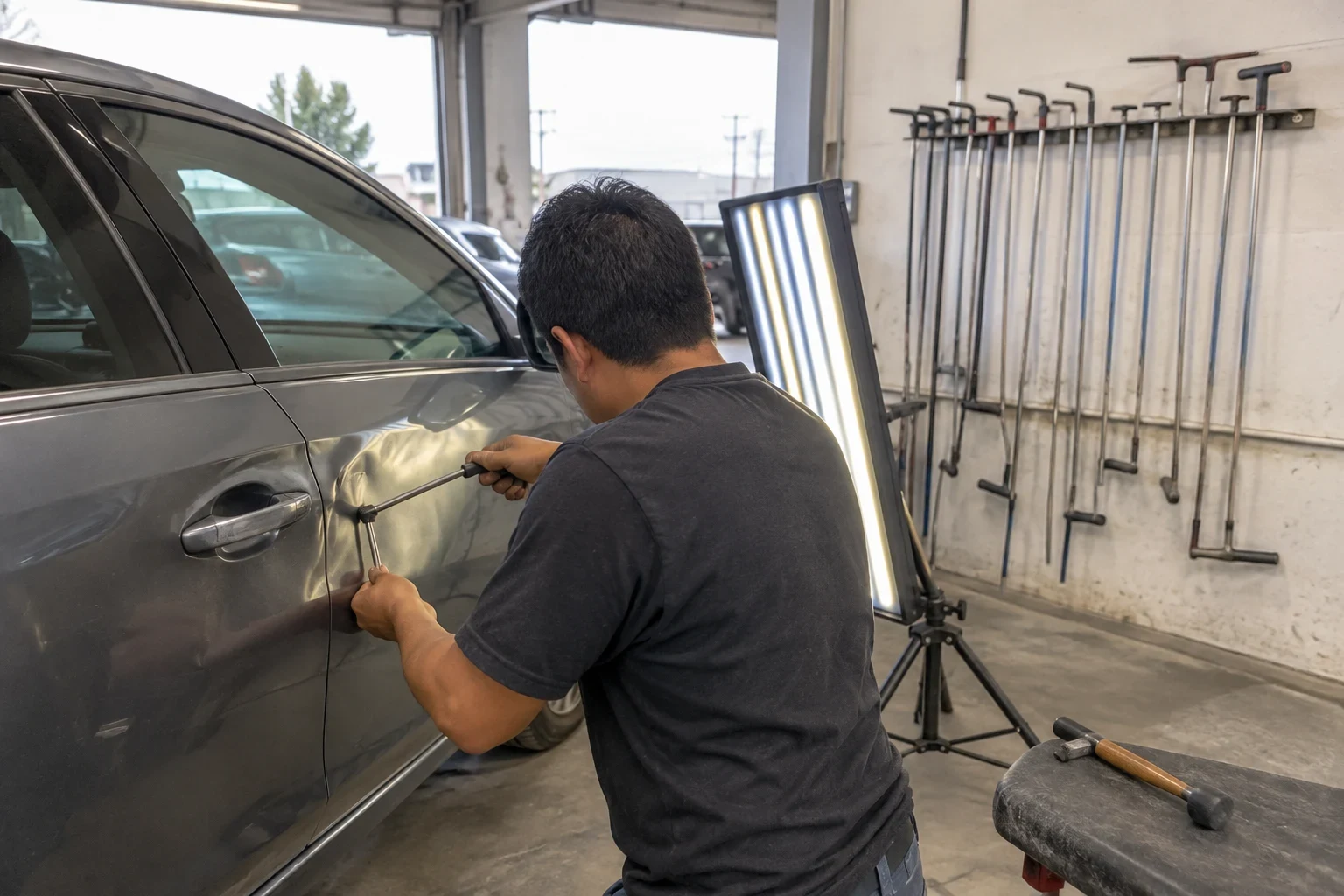
- We work the metal back from behind the panel with steel rods and picks, using a reflection board to read the surface. The original paint stays on the car, so there is no color matching and no filler.
- Glue-pull repair
- Where we cannot reach the back of a panel, such as roof rails or double-walled sections, we bond pull tabs to the paint and lift the dent from the outside, then tap down the high spots.
- Conventional panel repair
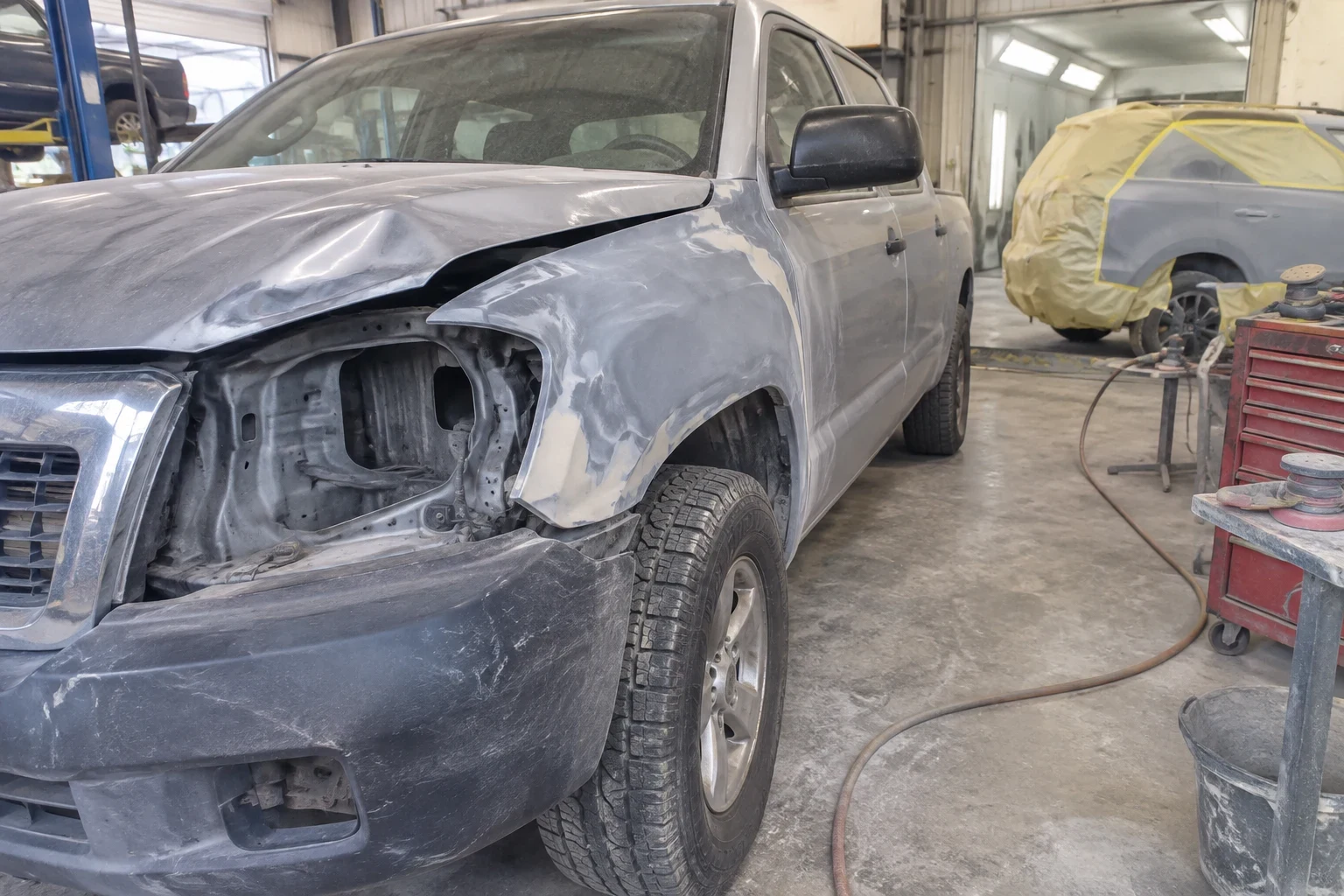
- Deep creases and stretched metal get shaped with hammers and dollies, shrunk where needed, and finished with a thin skim of body filler only where the metal cannot be brought fully level. Bare metal is primed and sealed the same day.
- Aluminum panels
- Aluminum hoods, fenders and liftgates have less memory than steel and crack if worked cold. We use separate tools for aluminum so steel particles never embed in the panel and cause galvanic corrosion.
- Refinishing when the paint is broken
- When a repair needs paint, the panel goes to our Paint and Refinishing process for primer, color-matched base and clearcoat, blended into the panels beside it.
Signs a Dent Needs Attention Now
Cracks or chips in the clearcoat
Check the rim of the dent in bright, angled light. Fine cracks or flaking mean the protective seal over the metal has opened.
Rust specks or bubbling paint
Orange dots or a raised blister near a dent tell you moisture has already reached the steel. Corrosion travels under the finish faster than it shows on the surface.
Damage on a crease or near an edge
The factory stamps those styling creases with tight bends, so an impact there stretches the steel more than a dent on a flat area. The longer that metal sits stretched, the harder it is to bring back to its original shape.
A door, hood or trunk that closes differently
If a gap between panels has changed or a door now needs a firmer push, the dent may reach the structure behind it. We check for that before quoting cosmetic work, and if the damage goes deeper we will tell you it belongs under Collision Repair.
Hail marks across the roof or hood
Hail does not hit often here, but one storm can leave dozens of shallow dents. When the paint did not crack, most of them are good candidates for paintless repair.
How a Dent Repair Moves Through Our Shop
- 1
Inspect the panel and the paint
We clean the area, check the finish under shop lights and measure paint thickness to see whether the panel has been repaired or refinished before. We also check what sits behind the dent: bracing, wiring, door glass tracks.
- 2
Explain the method and the estimate
We tell you whether the dent is a paintless job or needs metal work and paint, and why. The estimate lists the labor, any parts and any refinishing as separate lines.
- 3
Remove trim and gain access
For paintless work we may remove a tail light, door panel or headliner trim to reach the back of the dent. Clips and fasteners that break on removal are replaced, not reused.
- 4
Repair, seal and finish
The metal is worked level and checked against the reflection board or a straightedge. Any bare metal is primed and sealed, and refinished panels cure before we reassemble the trim.
- 5
Final check with you
We go over the panel with you under good light so you can see the result from several angles before you drive away.
What Changes the Price of Dent Repair
Two dents of the same size can cost very different amounts. The biggest question is whether the paint survived, because refinishing adds materials, booth time and blending. We give you the estimate after we have seen the dent and explained the method.
- Paint intact or broken
- Paintless repair is labor only. Once the finish is cracked, the panel needs primer, color, clearcoat and blending into adjacent panels.
- Depth, sharpness and location
- A soft round dent moves easily. A sharp crease, a dent on a body line or one near a panel edge takes much more time to bring back.
- Access behind the panel
- Dents behind bracing or in double-walled areas need trim removal or glue pulling, which adds labor.
- Panel material
- Aluminum takes slower, more careful work than steel and sometimes needs heat to move without cracking.
- Number of dents
- Hail or parking lot damage across several panels is priced by the count and size of dents on each one.
Dent Repair Questions
Something not covered here? (559) 955-0936
Can every dent be fixed without painting?
No. Paintless dent repair works when the paint is not cracked and the metal is not stretched too far. Sharp creases, dents with chipped paint and damage at panel edges usually need conventional repair and refinishing. We tell you which applies after we look at it.
Will the dent come back after paintless repair?
A properly worked panel stays where it is put. We relieve the stress in the metal around the dent rather than just pushing the center out, so it does not pop back with heat or a door slam.
Is it worth fixing a small door ding?
If the paint is cracked, yes, because that crack lets moisture reach the steel and rust can spread under the finish. If the paint is intact it is cosmetic, but small dings are the quickest and simplest to remove before anything else happens to them.
How long will my car be at the shop?
A few small paintless dents are often a short visit. Repairs that need metal work and refinishing take longer, because primer and paint need time to cure before trim goes back on. We give you an expected timeline with the estimate.
Should dent repair go through my insurance?
It depends on the cause and your deductible. A single ding often costs less than the deductible, while hail damage across the car usually makes sense to claim. Our Insurance Claims page explains how we work with your insurer if you decide to file.
Get the Dent Looked at Before It Spreads
Tell us where the dent is and whether the paint looks cracked. We will explain what the repair likely involves and set a time for you to bring your vehicle in for the estimate.